
What does research impact look like?
What does research impact look like?
Join ANSTO for the launch of its Research Impact Report, showcasing close to 80 case studies that demonstrate how ANSTO science, people and infrastructure are contributing to real-world outcomes across Australia.
From advances using nuclear science and technology for medical applications, new and enhanced industrial materials, environmental sustainability goals, and nuclear safety and security, the report captures the breadth and depth of research underway at ANSTO and, importantly, its impact.
The webinar, hosted by science communicator Lee Constable, will bring together ANSTO research leaders whose teams are featured in the report, including:
- Dr Andrew Peele, Group Executive, Nuclear Science and Technology, ANSTO
- Dr Ceri Brenner, Director, Centre for Accelerator Science, ANSTO
- Dr Mitra Safavi-Naeini, Director, Health Research and Technology, ANSTO
- Ms Jennifer Harrison, General Manager, Nuclear Stewardship, ANSTO
Join this webinar to explore and how scientific discovery translates into economic, environmental and societal impact.
Date: Wednesday 25 November 2026
Time: 1-2pm (AEDT)
Venue: Live online via Zoom
Online registration is essential.
Can’t make it? Register to receive a recording of the webinar.
About the speakers
Dr Andrew Peele, GE Nuclear Science and Technology, ANSTO

Andrew Peele was appointed Group Executive for ANSTO Nuclear Science and Technology in July 2021 and was Director of the Australian Synchrotron from 2013 to 2023. He is an Adjunct Professor of Physics at La Trobe University. In his current role, Andrew leads ANSTO’s research and development capability in support of national research priorities including health and the use of nuclear medicines, environment, and the use of nuclear technologies and materials. He also delivers real-life benefits to Australian research and industry through access to ANSTO’s unique research infrastructure capabilities such as the Australian Centre for Neutron Scattering, the Australian Synchrotron, the Australian Centre for Accelerator Science and the National Deuteration Facility.
Andrew’s previous appointments include leading the X-ray Science group in La Trobe University’s Department of Physics, a Queen Elizabeth II Research Fellowship held at the University of Melbourne and La Trobe University and post-doctoral research at NASA’s Goddard Space Flight Centre. Prior to undertaking his PhD studies at the University of Melbourne, Andrew was a qualified lawyer and practised as a solicitor.
He has served as a president of the Australian Institute of Physics and the Asia-Oceania Forum for Synchrotron Radiation Research, and as a board member of the Australian Institute of Nuclear Science and Engineering, the Stawell Underground Physics Laboratory Company and the Australian Mathematical Sciences Institute. He is a fellow of the Australian Academy of Technology and Engineering.
Dr Ceri Brenner, Director Centre for Accelerator Science NST Centre Accelerator Science, ANSTO

Dr Ceri Brenner is the Director of ANSTO’s Centre for Accelerator Science – a national user facility dedicated to proton and heavy ion accelerator science applications that enable research and innovation communities to explore the past, understand the present, and design solutions and technology for the future. She oversees a multidisciplinary team of scientists, technicians, and engineers who support academic and industry users across Australia and the world with a suite of instrumentation for ultra-sensitive radioisotope dating and tracing, materials characterisation and surface engineering, and precision radiation testing applications that advance knowledge, drive innovation and inform policy, in areas such as environment and climate, health sciences, nuclear safeguards, space technologies, advanced materials for energy and quantum, and cultural heritage.
Prior to starting at ANSTO, Ceri spent over 12 years at the Harwell Campus in the UK, first as a PhD student and eventually as Group Leader for Industry Partnerships and Innovation at the Central Laser Facility – the UK’s user facility for high-power and ultra-short pulse lasers used in fundamental and applied research in physics, chemistry, materials science, and biology. She is a laser-plasma physicist specialising in novel and next-generation concepts for proton and ion acceleration from petawatt laser interactions with matter. She first visited ANSTO in August 2018 during her national tour as the 2018 Australian Institute of Physics Women in Physics lectureship recipient. In 2017 she received the UK Institute of Physics Clifford-Paterson Medal for exceptional early-career contributions to the application of physics in an industrial or commercial context.
Dr Mitra Safavi-Naeini Director Health Research and Technology, ANSTO

Dr Mitra Safavi-Naeini is a medical radiation physicist and Director of the Health Research and Technology Group at the Australian Nuclear Science and Technology Organisation (ANSTO). Her research spans radiation and nuclear science applied to medicine, including particle and neutron interactions, radiation transport and dosimetry, nuclear and molecular imaging, radiobiology, radiation detection and theranostics.
Her work combines computational modelling with experimental and preclinical research, drawing on Monte Carlo radiation transport, detector physics and spectroscopy, quantitative imaging and biological studies. A central theme of her research is understanding how interactions between radiation and matter at microscopic scales can be measured, modelled and exploited to improve cancer diagnosis and treatment.
Dr Safavi-Naeini leads multidisciplinary programs involving physicists, chemists, biologists, engineers and clinicians, with collaborations across Australia and internationally. Her research interests extend from fundamental radiation physics to the development and evaluation of emerging imaging and therapeutic technologies, with a strong focus on translating scientific advances towards clinical application.
She holds a PhD in Medical Radiation Physics and a degree in Electrical Engineering. She is active in international scientific leadership and currently chairs the IEEE Nuclear Medical and Imaging Sciences Council.
Ms Jennifer Harrison, General Manager, Nuclear Stewardship, ANSTO
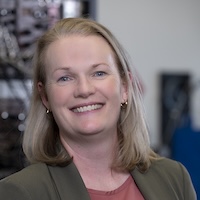
Jennifer is the General Manager of Nuclear Stewardship. Nuclear Stewardship maintains national science and technology capabilities that provide trusted advice, detection and measurement capabilities to ANSTO, industry, government and researchers. These capabilities are either mandated by Government or regulators or otherwise considered essential to ongoing ANSTO operations and include ANSTO’s environmental and airborne monitoring programs, the national Nuclear Forensics and Security Science facility and the national primary standard for radioactivity.
Jen holds a BSc (Hons), majoring in chemistry, geoscience and environmental science, from UTS. She also holds postgraduate certificates in Isotopes and Radioactivity in the Environment and Geochemistry from UNSW, and Science Communication from ANU.
Jen has over 25 years’ experience in the measurement and environmental behaviour of natural and anthropogenic radionuclides for applications such as environmental research and assessment of nuclear installations and legacy sites. Since 2018, Jen has been responsible for the management of science and technology infrastructure teams who deliver measurement excellence across a broad range of applications.