Tag Archives: Australia skills system

Harmonised learning: building a joined-up education system from school to university

From Certificate III to PhD: a connected learning pathway

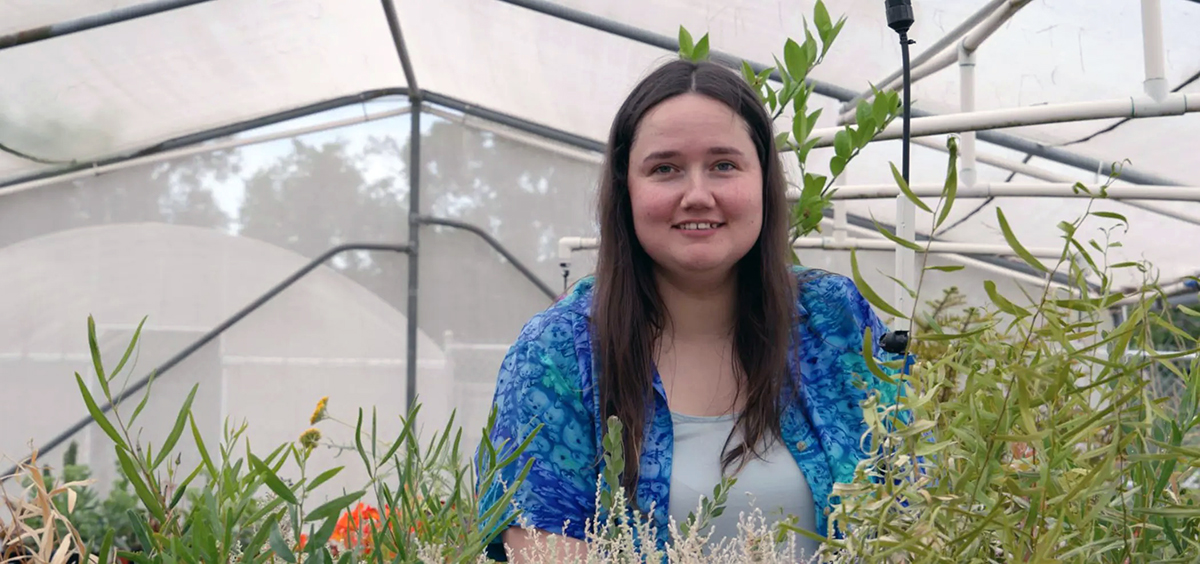
A few short years ago, Janneke Zoontjens wasn’t really sure what to do with her life. She’d been working odd jobs since she finished school in year 10, and was pondering her future when an online education brochure from Federation TAFE in regional Victoria caught her eye.

The brochure included a picture of a woman planting a tree, advertising a Cert III in Conservation and Land Management, “I saw that, and I thought ‘I can do that’,” says Zoontjens.

While studying at TAFE, Zoontjens realised she could expand it to a year-long Diploma of Conservation and Land Management. She then expanded that to a Bachelor of Environmental Science, all while staying within the same Federation administrative system.

Zoontjens is now halfway through a PhD on the ecology of malleefowl, a ground-dwelling bird that’s similar in size to a chicken. “I have found it challenging at times, but for the most part I’ve been enjoying it, especially when working out in the field, getting to do real research,” she says.

Zoontjens was lucky in that her chosen TAFE institution was able to facilitate a joined-up transition between a TAFE qualification and a university degree. It’s an unusual system in the Australian university context and one that Federation would like to expand further.

Flexible pathways for everyone

Man in a suit with blue check shirt.
Professor Iven Mareels, Federation University. Image: Federation.

Professor Iven Mareels, Executive Dean of the Institute for Innovation, Science and Sustainability at Federation University, says that such flexibility allows opportunity for people who might not traditionally see themselves as university material.

“I believe that we’re leaving far too many people behind in our education system,” says Mareels.

It’s a sentiment shared by Bill Shorten, Vice Chancellor of the University of Canberra, which in April overhauled its marketing to adopt “U CAN” branding.
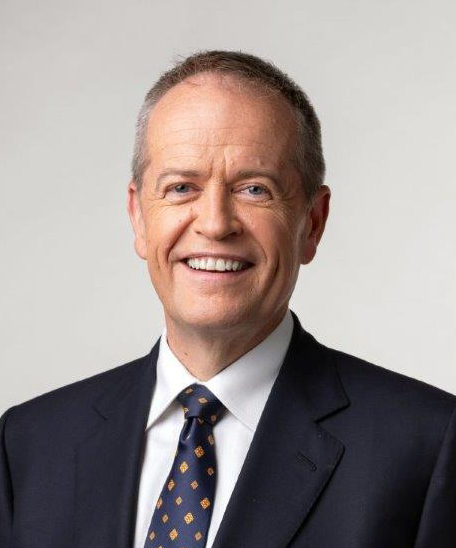
Man in a suit and tie.
Bill Shorten, University of Canberra. Image: UC.

“What this country’s suffered from for a long time is an artificial demarcation between TAFE and universities,” Shorten says.

U CAN is working towards more seamless integration of TAFE and university credentials – including microcredentials – so that learners of any age and any background can easily plug education gaps as they arise.

Shorten says the mixed TAFE-uni model might not be attractive to Australia’s more traditional universities, but that he believes education “belongs to everyone”, and that the labour-market challenges of the future demand a new approach to higher education.

“I’m not arguing for lower scholarship, I’m just arguing for greater access.”

Seamless transitions between learning environments

Woman wearing glasses and a bright blue shirt.
Professor Tania Signal, Central Queensland University. Image: CQU.

At Central Queensland University (CQU), it’s the flexibility between vocational education training and university degrees that has allowed a less traditional mix of students to be studying for a degree.

Professor Tania Signal, Acting Dean of the School of Health, Medical and Applied Sciences, says that “a lot of CQU students are first in family, they’re regional, they might be lower socioeconomic, we have a good proportion of First Nations,” she says.

The university is collecting the numbers, but Signal says they have noticed a trend for students to transition from Cert III in pathology collection to a Bachelor of Medical Laboratory Science.

She says the path to a university degree at CQU can even begin at high school level, with students undertaking VET training as part of their high school certificate.

This harmonised approach positions students to move seamlessly from high school into a joined-up education system, enabling progression across levels as their skills and ambitions evolve.

A joined-up skills system: universities, TAFEs and industry working as one

The Australian economy is shifting toward increasing demand for service industries and higher-skill roles, according to a report released late in 2025 from the Federal Government agency Jobs and Skills Australia (JSA).

The higher education sector needs to better align training with job requirements if it is to support current and emerging industries, the report says. Some institutions, including the University of Wollongong (UoW) and Western Sydney University (WSU), are already leading the way.

A common language for skills and qualifications

Amongst the 5 recommendations to fill future labour market shortages, the JSA report suggests that shared language between the skills required by industry and the education offered by Australian universities and TAFEs could make it easier to compare job requirements with qualifications and identify gaps.

Higher education institutions working more closely with industry would go some way to establishing a shared taxonomy.

Man in grey suit jacket.
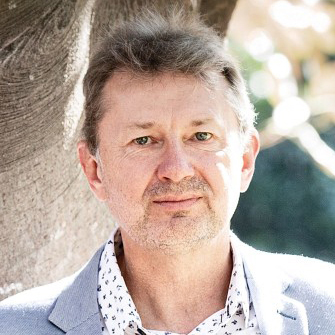
Ty Christopher, Director of the Energy Futures Network at UoW. Image: Via LinkedIn.

It’s the kind of message that the Australian Research Council Centre of Excellence for Renewable Fuels at UoW has taken on board as it integrates research, training and industry collaboration.

“Industry is embedded from the outset”, says Ty Christopher, Director of the Energy Futures Network at UoW, “with partners contributing funding, expertise and real-world challenges”.

Christopher says the arrangement also produces a useful feedback loop, with industry being delivered job-ready graduates with the exact skills they are looking for.

The centre is working on projects of national significance, such as figuring out how to produce ‘green’ iron — with hydrogen instead of coal — at scale. It’s an area of research and development that the federal government has prioritised because of its importance to our largest trading partner, China.

Christopher says that such research has the potential to create “entirely new domestic industries”.

The value of life-long learning

The JSA report also suggests that diversifying the appeal of higher education to less traditionally represented groups is key to closing the gap between jobs and skills.

Beyond the typical 18-year-old high school leaver, higher education institutions need to find ways to appeal to people who might not have considered university.

At WSU, the administration has been trialling microcredentials to appeal to learners who might not have the time or resources to commit to a traditional undergraduate degree.

Man in dark grey suit jacket, standing in front of a colourful background.
Brian Falzon, Executive Dean of the Faculty of Engineering, Computing and Science at WSU. Image: WSU.

Brian Falzon, Executive Dean of the Faculty of Engineering, Computing and Science at WSU says that interest in STEM microcredentials has been strong and is continuing to grow, particularly in subject areas that are experiencing labour shortages and in areas where new technology is changing the nature of work.

The appeal of WSU’s microcredentials “is further strengthened by clear stackability into larger qualifications,” Falzon says.

The JSA report particularly zeroed in on the importance of upskilling Australians with AI skills, and Falzon says that microcredentials in digital skills are in high demand.

Because the topics were determined using a “structured, industry‑driven process”, the result has been “highly specific, immediately applicable skills”.

JSA Commissioner Barney Glover says that Australia’s long-term productivity will depend on how well the tertiary education system equips people with the right skills.

Glover says, “To build a truly inclusive workforce, we must invest in lifelong learning, upskilling and career mobility.”